Monday, October 31, 2011

Avoiding Financially Disastrous Habits

There are many habits that are too hard to change. I have learned that to avoid unnecessary expenses, one has to plan in advance. Planning in advance is a good habit. It can save you a lot of money too.

So we plan and do family budget that covers all including food, phone, electricity, water, entertainment, gifts to name a few. We made a decision to spend only based on budget. Of course there are cases where the item we need to buy was not included in the budget. For such a case, we review our financial resources and align our budget.

But the reason why I am writing this article is to talk to you about one budget buster that I experienced- none other than unplanned activities. If gone unchecked, it becomes a financially disastrous habit.

The other day, my wife and I decided to go to market. Because we use cash, I normally withdraw money in advance for this purpose. That day, I didn't do that,  but I knew I can withdraw from an ATM of a bank near the market. When we arrived at the bank, the line of people intending to withdraw money was too long. We decided to do it in another bank, also near the market. When we arrived there, the line was longer! Oh boy. We made our way out of the market and went to a bank about 3 kms away from the market. By this time, my mind already calculated the amount of gas I could have SAVED if only I had prepared the money in advance.

That same day, we decided to visit the cemetery to visit our parent's tomb. We were trying to beat the traffic that is expected during the All Saints Day. So off we went. This trip wasn't really planned. The route I choose was heavy with traffic. We had to get out of that and take a longer route. Once again my mind started to compute the amount of gas I could have SAVED if only I planned in advance. That's wasn't the end, when were approaching our destination, to our surprise, the road was clogged with all kinds of vehicles. We had to abandon our plan and have to take a longer route to do that.
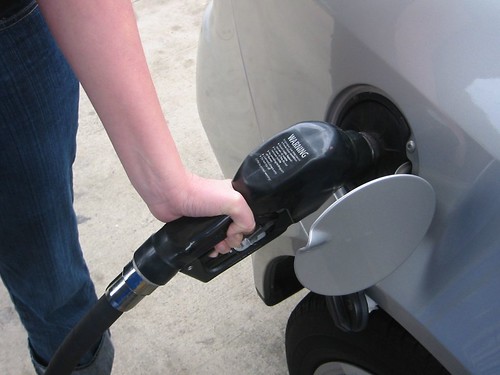
That day, I spent a lot of money on gasoline because we didn't plan ahead. Unplanned activities are costly and can be a financially disastrous habit if it remained unchecked.

The lesson: In everything you do,  it is best to sit down and plan ahead. It will save you a lot of MONEY. Plan ahead when you travel and when going to merket or supermarket.


To our debt-free life,
Jimmy

P.S. There are other habits that can be financially disastrous if unchecked. Can you name some for us? I would appreciate if you can comment.


Photo credits:
http://farm1.static.flickr.com/219/460375914_110a64953a.jpg
http://www.paraisophilippines.com/img/market.jpg

Friday, October 28, 2011

Some Practical Ways To Reduce Debt


This is a bit simple. I found out that we can actually reduce our expenses by using the "zero waste" concept.
I am clearing the vermi compose 
I came to know of this concept when my wife and I, my daughter Nica, our friends Mon and Elvira together with their children went to attend a week of seminar at Semilya Sa Kinabuhi in Bukidnon. This seminar was different. The mornings were dedicated to working in the field, which includes watering the vegetable gardens, cleaning the environment, vermiculture, etc. After lunch, we go to our class. We learned a lot from this one week of stay at Semilya.
Nica, Maritess and me enjoying our work of selecting our harvest of stringbeans to be sold at the market

Maritess and I, preparing early for work at the farm


Before we left for home, we toured Mt. Moriah, a lettuce farm owned by Dodong Cacanando. Dodong is also the President of Semilya. Mt. Moriah is one of the biggest supplier of lettuce to Mc Donalds.
Me and Maritess having a taste of how to harvest the lettuce
Me at Moriah Farm

At Mt. Moriah, they implement the "zero waste" concept. Simply put, they use whatever they can from what they have instead of buying these. Case in point is the catch basin for the waste of their piggery farm. Instead of using "iron" they used bamboo as the material. They are also using the pig's waste as their fertilizer. In this way they save a lot of money!

What do you think this will do to our budget if we put this concept in our homes? I can think of one example: instead of buying vegetables, why not plant them in your backyard? Okra, Camote tops, Kangkong are a some example. We have a pumpkin garden where we source its leaves as our veggy. We also have Malunggay, the leaves of which are a great source of nutrients.. for free.

Simple things like this contribute to reducing our debt as we use whatever we have instead of buying them outright.

What else can you think of? Why not share it with us?

To your debt-free life,
Jimmy

Friday, October 07, 2011

Getting Out Of Debt Takes Courage


I have noticed that time is an important ally in our battle to reduce debt. There is a time for everything. When my wife and I decided to deal with our debts, we realized that we have to do something fast. Let me share with you some of the practical, down-to-earth actions we did:

1. We reduced our expenses. This was simple. First, we terminated our cable TV subscription since we are having a hard time paying for it anyway. That was easy. Second, If I could, I did all maintenance work at home. Lastly, we sat down with our children and told them what we were trying to do and we enlisted their cooperation. That was a bit embarrassing but we did it. It paid off. Every expenses, no matter how small, was evaluated against our goal of reducing expenses.

2. We looked for ways to increase our income. My wife, after some encouragement, have gone into business distributing Dakki products. She just started but we know it will produce one day. We looked for items in the house that we don't need and we put them on sale. These included two (2) chest freezers and other items. In other words, we sold and still selling our non-performing assets. Then I got a raised in my salary early this year. That was timely!

3. We Invested. This was a bit hard. The only way we knew how to do this was to seek the wisdom of our God. You may not believe it, but it works! We practiced what we believe -- that as we sow, we will reap. We first gave to God our tithes, the ten percent of any amount we received.  Then, we sowed money by helping those who were in need. This was sacrificial giving on our part, since we also need money. You can try this one, it works every time. The amount of money we received was more than what we gave and helped us in balancing our finances.

In all of these things, the bottom line is to do all you can to generate cash in order to avoid falling into debt while clearing your existing debts.

It's almost a year now. Time has helped us recover some debts. One of my credit card has been fully paid. Patience paid off.

What else do can I do? Maybe you have ideas we can put into action.

To our debt-free life,
Jimmy

Photo credit: http://www.flickr.com/photos/alancleaver/4105755730/sizes/m/in/photostream/

Saturday, October 01, 2011

How to Become Financially Independent in Seven Years or Less


I am 59 and looking forward to a financially stable life. I can't complain, but I also want more in life. I feel I am just beginning to accelerate in my quest for financial independence. That's part of the reason why I blog. It helps me discover out-of-this-world ideas, opportunities and people. I learn from them.

Mark Ford, Editor of the Palm Beach Letter, son of a teacher, started out with no money but built a multi-million fortune.

If you are middle aged, whose net worth is meager,  and your income is barely sufficient to meet your expenses, this article is for you. He says that we should take responsibility for our situation and make changes. When we see our financial goal not aligning with our age, we are to take courage. Don't give up on your dream of being wealthy. Mark says that we always have the ability to change our financial life. But it will take a bit of time and patience.
Here are four things he suggests we do:

1. Accept the fact that you are solely and completely responsible for your financial situation. Nobody can change your future but you. The sooner you do that, the anger and blame will be dealt with and you begin to feel financially powerful.

2. Set realistic expectations. Don't be in a hurry to get rich. Be contented with 10%-15% returns per year. This is a journey and like a train, you can't go from 0 to 100 mph in no time flat. Be content with 10 and then 20 and soon you're doing 100. Your journey to millions of dollar is earned $100 at a time.

3. Thoroughly understand the difference between spending, saving and investing. Mark says that every paycheck you get cover your necessary expenses first, then put money on your savings and then put some money toward investments. Then and only then, after paying yourself, should you add to your spending.

4. Recognize that your net investible income (the amount of cash you have after spending and saving) is the single most important factor in determining how quickly you will become wealthy. Commit to adding to your income a second income.

I love the what he says about the value of time: devote your time to wealth building rather than spending time on non-productive hours like watching TV.

I am so happy to discover this very practical and doable tips from a man whose been there and came out successful. If Mark can do it, we can.

To your debt-free life,
Jimmy

P.S. I have changed the way I think. Blogging  about my passion, helped me gain not only personal but global economic realities.

Photo credit: http://www.flickr.com/photos/rmgimages/4882450962/sizes/m/in/photostream/

Saturday, September 24, 2011

The Reason Why we Get Into Unwanted Debt

The Good Book says: "Do not wear yourself out to get rich; have the wisdom to show restraint." Proverbs 23:4.

Well, this is King Solomon, the wisest and wealthiest king that ever lived, telling about his experience when it comes to getting rich.

I realized, in my own life, that I have been trying to get rich. I've focused on trying to get rich. That's not bad isn't it. Everyone wants to get rich. So why am I telling you this?

I got into big debt trying to get rich.

The Plan
One day, a friend visited us in our office. She came with the sales representative of a big real estate company selling condo units. I was called by my partner to that meeting. The sales pitch was this: buy a unit which cost about P1.9M, pay the reservation fee of P20K, then pay the 10% downpayment in 18 months just in time for the building to be finished, thereafter, pay the balance.

The plan was to have the unit rented and use the money to pay the monthly amortization. So it's self liquidating. A passive income in the making. Any investor can see that.

The Dotted line
So I signed on the dotted line. The only problem was, the money I was expecting, an increase in my salary didn't come. So, I had to borrow to pay for my monthly downpayment. I got over that in 18 months on borrowed money.

Here comes the balance. I applied for a loan, I was only given 70% of the amount I need to pay the balance. My world crumbled. I had to give up the unit and forfeit any money I paid. I had no choice.

Fortunately, my sister got interested in the unit and paid it cash. But I had to pay interest charges and the penalties that came due to delays in the payment of the balance. It was in the contract, only I didn't read it. They are in small letters.

Today, I am still paying for the penalties.

Two lessons I learned:
1. Don't be presumptuous. Study the offer and know your financial capability. I wasn't ready. I was day dreaming and wishing my increase will come to take care of the downpayment. It didn't. My income can't sustain the monthly payments of the condo unit.

2. Learn from lesson number 1.

To your debt-free life,
Jimmy

Tuesday, September 20, 2011

4 Things You Should Never Do With Your Credit Cards

4 Things You Should Never Do with Your Credit Cards


I can identify with Susan McCarthy in all four areas when it comes to using my credit cards. I have experienced the worst that can happen to me like overblown balance due defaults on payments and sometimes paying only the "minimum payments", letters from the credit card company's lawyers demanding immediate payments in lieu of a court case, worries and nightmares. I am thankful for Susan for this article and I know it will help a lot when you do what she suggest. I did, and I am almost out of my credit card debt.


Susan McCarthy, a financial adviser in Oklahoma City and author of The Value of Money, lists her top four credit card don'ts:

1. Don't make only the minimum payments. This stretches out your payment and, thanks to the interest, significantly increases your overall cost.

2. Don't carry too many cards. Multiple cards make it easier to rack up debt because it's harder to keep track of your spending. Having lots of cards isn't necessarily bad for your credit, but misusing them is. So limit your plastic to two national cards (store cards often carry higher interest rates) that you manage carefully.

3. Don't miss payment due dates. Not only will you be hit with a late fee-as high as $39 on some cards-but your interest rate could also jump. Sign up for online banking or pay over the phone if you're up against the deadline. (You may pay a processing fee, but it will probably be less than the late fee and the possible interest-rate hike.)

4. Don't take cash advances. These advances generally come with sky-high interest rates and service fees, making them a far too expensive way to get cash. Avoid at all costs.


To your debt-free life,
Jimmy


Source: http://shine.yahoo.com/channel/life/4-things-you-should-never-do-with-your-credit-cards-530910/

Saturday, September 17, 2011

3 Things Needed to be Financially Independent

Yesterday, I had a chance to meet 19 prospective Filipino overseas workers. I presented the session on "Financial Management", part of their Pre-Departure Orientation Seminar (PDOS). PDOS is a requirement every OFW have to go through to prepare them for their life overseas.


Three things were suggested in order to be financially independent.
1. Plan. We need to plan. Plan that is not just stored in our minds but a written plan, which covers education, house and investment or business. A written plan is better than one that is imagined. A written plan stimulates your thinking resulting in a better and doable goals. You can also refer to it every now and then and make adjustments when needed.


2. Save. Save at least 20% of your income. Treat this savings as an expense, which means you deduct it first. The formula goes this way: Income - Savings = Expense. The common formula, Income - Expense = Savings, doesn't work.


3. Invest. Invest your savings in order for your money to make more money. Savings must be converted to assets to increase income. Unfortunately, many OFW still need help in this area. There is a need to be financially literate.


The road to success is set for these batch of OFW going to Japan. They are excited with the prospect of making more money but more importantly, in the idea that they must be financially literate to efficiently manage their resources. Like them, we must make a decision to be financially literate in order to be financially independent.


To your debt-free life,
Jimmy