The result will give you an idea how to set your budget for each category. Budget is very important. It gives you a parameter of how and when you can spend your money. It helps you to be disciplined in the use of your hard-earned money.

Friday, April 27, 2012
Top 3 Free Budgeting Tools For You
You want to be serious about making your financial house in order but don't know where to start. Well, here's a starting point for you. Find out what's happening to your finances, Take an inventory of where every cents go by listing all expenses you do daily for a month. Categorize the expenses by type e.g. Food, Gas, Utilities, etc. Tally.

The result will give you an idea how to set your budget for each category. Budget is very important. It gives you a parameter of how and when you can spend your money. It helps you to be disciplined in the use of your hard-earned money.
The result will give you an idea how to set your budget for each category. Budget is very important. It gives you a parameter of how and when you can spend your money. It helps you to be disciplined in the use of your hard-earned money.

Wednesday, April 18, 2012
5 Tools For Teaching Your Kids How To Save
I love this article by Carol J. Alexander at the Christian Personal Finance. I would like to post it here to guide you, if you're a parent. You will benefit a lot if you try to use it on your kids. I have seen some of her ideas worked on my children. Now they're all professionals and saving is part of their finances. You must teach them while they're young.
5 Tools For Teaching Your Kids To Save Money
All children are different. My six children may all look the same on the outside, but on the inside they all march to the beat of a different drum. I have naturally hard workers, and I have those we trained to work. I have a son who breathes music, and I have another son that needed his music lessons.
Likewise, I have a few who squirrel away every penny they get and a few whose pennies slip right between their fingers. Yet as a parent, you want to do your best to train your children to have positive character qualities—and saving money is one of them. Here are 5 tools for teaching your kids to save money.
Saturday, March 31, 2012
What We Say Matters
Its been hectic these last few weeks. What can big debt do to a person? More specifically, how do you deal with at least four banks running after you and collecting from you huge amount of money?
For a simple guy like us, that means a lot of worry and anxiety. My blood pressure would probably rise due to tensions running high. Sleepless nights. No appetite for food. These are just some of the consequences of debt, which are due and collectible.

During these times of crisis, people blur out words that are not helpful to solving the problem. Words are very important. What we say, the words that come out of our mouth, are like the "steering wheel" of cars or the "rudder" of big ship that can steer that thing to the direction the driver wants to take it.
Most often, during this times of crisis we say words that have negative effects like "there's no more hope", "I am going to jail for this", or "there's no more solution" to this problem. You know what a person believes by what comes out of his or her mouth.
Proverbs 21:18 says "Death and life are in the power of the tongue. An they that love it shall eat the fruit thereof." In other words, what comes out of our mouth determines life or death. If we choose negative words, you shall eat it and it will happen.
Choose to say what you want to see happen in my life. Because your tongue, what I you say, is the steering wheel of your life!

So if you want to get out of debt, even huge debts, the solution doesn't start from your bank accounts, or from your friends, and relatives' help. It starts from your mouth. What you say is the steering wheel of your life. You say what you want to see happen to your debts. Try it, it works.
To yours and my debt-free life,
Jimmy
For a simple guy like us, that means a lot of worry and anxiety. My blood pressure would probably rise due to tensions running high. Sleepless nights. No appetite for food. These are just some of the consequences of debt, which are due and collectible.
During these times of crisis, people blur out words that are not helpful to solving the problem. Words are very important. What we say, the words that come out of our mouth, are like the "steering wheel" of cars or the "rudder" of big ship that can steer that thing to the direction the driver wants to take it.
Most often, during this times of crisis we say words that have negative effects like "there's no more hope", "I am going to jail for this", or "there's no more solution" to this problem. You know what a person believes by what comes out of his or her mouth.
Proverbs 21:18 says "Death and life are in the power of the tongue. An they that love it shall eat the fruit thereof." In other words, what comes out of our mouth determines life or death. If we choose negative words, you shall eat it and it will happen.
Choose to say what you want to see happen in my life. Because your tongue, what I you say, is the steering wheel of your life!
So if you want to get out of debt, even huge debts, the solution doesn't start from your bank accounts, or from your friends, and relatives' help. It starts from your mouth. What you say is the steering wheel of your life. You say what you want to see happen to your debts. Try it, it works.
To yours and my debt-free life,
Jimmy
Wednesday, March 07, 2012
Budgeting For The Starters
I had a wonderful time with my eldest daughter, Rache, just before she left for a vacation in China. One of the things we talked about was how she will have money ready every time an opportunity to travel presents itself to her. She has realized that she must be serious in her finances from that time on. I am an advocate of having a family budget. I have been telling her to have a budget of her own so she can manage her finances well. I think that small talk we had will change the way she values her money. I have a guest post here about starting to make a budget. It's simple you can easily do it. I am proud of Rache. She will be a millionaire someday if not soon. Here's a guest post from Financially Poor:
Budgeting: For The Just Getting Started
So you have come to the realization that you need to control your finances. Well I’m here to help you get started. Starting a budget is somewhat easy but there are a few steps that can trip you up. What I’m going to do is walk you through the mine field so you can have a budget that you can call your own.
Starting out
What your first step needs to be is make a list of categories of bills that you have every month like rent or mortgage, phone bill, etc. Here’s what mine looks like:

The reason to list those first is so when you decide how much goes into each category you can get the necessary bills out of the way first and know how much you have left over for the rest of the categories.
Next make a list of all of your monthly variable expenses like this:

If you want to make the categories more detailed go for it. You can make eating out into breakfast lunch and dinner if you want. Customize it to whatever works for you. Don’t worry about making it perfect the first time around though. Budgets tend to evolve over time so just make a first one that will get the ball rolling. The Spouse 1 and Spouse 2 is for fun money for each person FYI. Be sure when you put the two groups together that you add a line for savings between them.
Divvying Up Your Money
After you’re done making categories for your spending it’s time to find out your spending. This step is to find out how much money you spend in each category. There’s a few different ways to do this.
One way is to guesstimate how much you spend in each category. Your regularly monthly bills will be pretty accurate but your variable spending will probably be pretty off. With this method you’ll be adjusting your budget a lot and can be frustrating so I wouldn’t recommend it for most people.
The other way is to track your spending for a few months and fill in the categories with those amounts. If you have a debit card I would use that because then you can see your transactions online and it’s so much easier to keep track of. If you don’t have a card and you just use cash then think about getting a small note pad and writing your purchases down. This isn’t the most fun step but it is the most eye opening experience. When you actually see how much you spend a month you may be very surprised.
At the end of each month put all of your purchases in their different categories. This will give you an idea about how much you spend in each category. Now comes the meat and potatoes part. The point of a budget is to control your money instead of letting it control you. So this is where you decide how much you want to cut back on variable spending. I’d recommend you cut back slowly so that it’s not a big shock and turns you off. If you spent $300 on entertainment try to cut back to $250. If you cut back a lot you might get frustrated that you can’t stay within budget and could cause you to give up. so each month just cut back a little more and eventually you’ll figure out where a comfortable level is for that category.
Once you figured out your budget write it down on a piece of paper or put it in a spread sheet. I write down my budget in a notebook so I can carry it around wherever I want to and work on it. I have mine set up like this:

Another reason I write in a notebook is because I fill out, on the page after my budget, columns with the different variable spending categories and amount budgeted. Then through the month I write down the expenses as they occur in the correct category. This helps me save a lot of time.

That’s pretty much it. Not hard at all. Over time your budget will be customized to your situation. What you just created is a gateway to a better financial life. This is a tool that’s going to help you get control over your finances.
How was your experience setting up your first budget?
I hope you have made one budget for yourself and your family.
To your debt-free life,
Jimmy
Tuesday, February 28, 2012
Does Cruise Control Save Gas And Money?
This is a rejoinder to my earlier article about saving money of gas. This article is written by John Frainee on the Christian PF. As I was reading it, it sounds doable. I often do cruise control on my way to and from work along Commonwealth Avenue. As you know that road is too wide and has slopes of more than 5 kilometers going down.

I would like to post this here for our benefit. Here goes.
I’ve been called by some a “grandpa” on the road. They mean to say that most grandpas are old men, and that most old men drive slowly. Well, I’m not sure that’s a logical argument, but I admit that I do drive slower than most.
I would like to post this here for our benefit. Here goes.
I’ve been called by some a “grandpa” on the road. They mean to say that most grandpas are old men, and that most old men drive slowly. Well, I’m not sure that’s a logical argument, but I admit that I do drive slower than most.
Today I’d like to make the case that
“driving slowly” (aka, going the speed limit) and using cruise control can
actually save you money.
How Using Cruise Control Saves You
Money
1. Cruise control helps you avoid the
need for acceleration.
Whenever you accelerate, you’re using
gas. When you’re using gas, you’re losing money. Turning on cruise control will
help you avoid the craving to hit the gas when your favorite dubstep song hits
the radio.
2.
Cruise control will help you maintain a constanteconomical speed.
According to the US Department of
Energy, gas mileage usually decreases rapidly at speeds above 60 mph:
You can assume that each 5 mph you
drive over 60 mph is like paying an additional $0.28 per gallon for gas.
Yikes. That’s quite an increase in
price to get to your destination a bit faster. If you’re the kind of person who
complains
3. Cruise control, set at the speed
limit, will help you avoid tickets.
I’ve never received a ticket (I guess
“grandpas” don’t get tickets, ha). But for those of you who have, I’ve heard it
isn’t a pleasant experience.
Tickets are expensive. Many states
are over $100 per ticket. It’s not uncommon to see a $300 ticket. Ouch. That’ll
put a dent in your 7 Baby Steps.
4. Cruise control results in less
maintenance costs.
Taking corners fast is damaging to
tires and overall hard on your vehicle. Cruise control gives you a constant
speed and helps you avoid accelerations that give your engine more work to do.
When To Use Cruise Control
The natural answer is as much as
possible. Here are a few places I use cruise control:
The Highway or Freeway
On long stretches of road cruise
control comes in handy. Typically you want to go the same speed on the freeway
and don’t have to worry about speeding up or slowing down (unless you live in
Los Angeles).
Low Traffic Areas
There is a certain amount of
hesitation factor when it comes to turning off your cruise control. Make sure
that if you turn on your cruise control you also have the ability to turn it
off quickly in the event you have to change speeds. The last thing you want to
do is rear-end someone because you forgot which button to push.
On my Honda, there are three ways to
turn off cruise control:
1.
I can push the master cruise control
button.
2.
I can push the accelerate and
decelerate buttons simultaneously.
3.
I can tap my brakes.
Now, I’m not one to make decisions
quickly. If you give me several different ways to do one task I freeze up. This
is exactly what happens when I have to choose a method to end my cruise control
session. Therefore, I realized that I had to decide beforehand which method I would use to quickly bring the
vehicle out of cruise control. Now I push the master cruise control button.
You can generally avoid this panic by
using cruise control in very low traffic areas. Ensure you keep good distance
between you and the car in front of you, and you’ll be just fine.
How Do You Save Money on the Road?
Using cruise control is just one idea
that can save you money. Do you have any other vehicle tips you could share in
the comments section below that save you money?
I used to see my brother-in-law driving too slow on Commonwealth Avenue in Quezon City. I keep on wondering why? Then I found out that he was using cruise control to save on gas. This may sound unbelievable but I tried it and it helps me save on gas.
To your debt-free life,
Jimmy
Sunday, February 26, 2012
Save Money on Gas Tip
I have learned something new last week. Gas is a big part of my expense since I use my car (Corolla GLi) in all my travels. I am thankful for that car, a 1994 model, which I faithfully keep on top condition, thanks to my friend Chief Ruel of Exalta Car shop in Banawe, Quezon City.
Now back to my discovery. Usually when I fill my car with gas, I just let the gas attendant fill it up the way the used to do. They press on the "automatic" mode and let the pump to its work.
 I learned that when they do that, the gas pumps the gasoline and the "air" together so I get less gasoline in effect.
My dear friend, Adel, shared with me that I can save money on my gasoline expenses by asking the gas attendant to fill my car using the "pure" way or "Puro" in tagalog. The next time I went to my gas station, I asked the attendant to fill it pure. I noticed that they press the pump slowly and taking their time doing it.
What they are doing was making sure that no air or less air is mixed to the gasoline. To better imagine what I am saying, when I fill my car with a P1,000 gasoline, the "automatic" way takes less that 2 minutes. But when I request to fill my car the "pure" way, it takes them some 5 minutes to fill the same amount of gasoline.
As a result, I save money with more mileage added to my car somewhere in the vicinity of 20 kilometers.

Why not try it yourself and see how much you can save. Surely the savings will help you reduce your debts.
Here's to our debt-free life,
Jimmy
Photo credit:
http://www.gettyimages.com/detail/photo/man-holding-petrol-pump-nozzle-in-high-res-stock-photography/BB1111-001http://www.flickr.com/photos/rmgimages/4882451256/sizes/m/in/photostream/
Now back to my discovery. Usually when I fill my car with gas, I just let the gas attendant fill it up the way the used to do. They press on the "automatic" mode and let the pump to its work.

My dear friend, Adel, shared with me that I can save money on my gasoline expenses by asking the gas attendant to fill my car using the "pure" way or "Puro" in tagalog. The next time I went to my gas station, I asked the attendant to fill it pure. I noticed that they press the pump slowly and taking their time doing it.
What they are doing was making sure that no air or less air is mixed to the gasoline. To better imagine what I am saying, when I fill my car with a P1,000 gasoline, the "automatic" way takes less that 2 minutes. But when I request to fill my car the "pure" way, it takes them some 5 minutes to fill the same amount of gasoline.
As a result, I save money with more mileage added to my car somewhere in the vicinity of 20 kilometers.

Why not try it yourself and see how much you can save. Surely the savings will help you reduce your debts.
Jimmy
Photo credit:
http://www.gettyimages.com/detail/photo/man-holding-petrol-pump-nozzle-in-high-res-stock-photography/BB1111-001http://www.flickr.com/photos/rmgimages/4882451256/sizes/m/in/photostream/
Thursday, February 16, 2012
To Love It Or Love It Not
I would like to post this very good article on the love of money by Dave Ramsey. He says that our view of money is important if we plan to get out of debt. How we spend our money is directly related to our perspective of money. So here goes "Love It Or Love It Not" by Dave Ramsey:

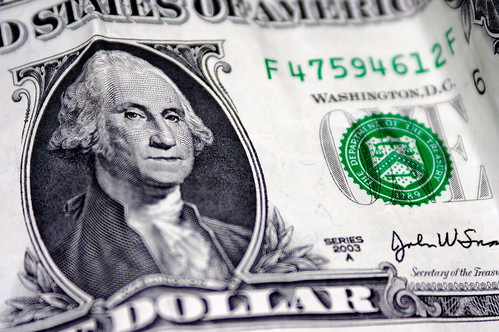
A lot of people love Benjamin Franklin.
Oh, come on. Admit it. You're probably pretty fond of Benjamin Franklin, too. He's the guy on the front of the $100 bill, and you're not going to say you don't love $100 bills, are you?
If we're honest, most of us love money. Actually, we love money we don't have. How else can you explain our addiction to credit cards? Our culture loves money so much that we have television shows dedicated to showing off people's million-dollar houses and garages full of luxury cars!
Every day, we see thousands of ads that promote the dollar as the end-all-be-all ticket to a happy life. But we know better than that...don't we?
Wait a minute, you say. Doesn't Dave Ramsey talk about building wealth all the time? He sure does. But Dave is talking about a healthy view of money. The foundation of Dave's ideas of wealth building are that you get out of debt and build wealth so you can help your family and others … and leave a legacy after you're gone.
It's also okay to want to make a lot of money and to enjoy spending it! But what's the end goal? Is it to own stuff, or is it to help others and to change your family tree?
A lot of us have an unhealthy view of money. The Bible says that "the love of money is a root of all kinds of evil." It's that type of "love" that drives us to buy stuff with money we don't have to impress people we don't like.
For some people, the "love" of money is more like an obsession or an addiction. It can drive a wedge between spouses and teach kids that stuff is more important than anything else. It can lead to divorce and broken families. When we talk about changing your family tree, that's not what we have in mind!
Think of money as a tool. You can use it to help yourself and others, or you can use it to tear all of that down. You can use it to save for your kids' college fund, help your church or favorite charity, or you can use it to buy a bunch of stuff that will be collecting dust two years from now.
A healthy love of money will drive you to get gazelle intense about working through the Baby Steps and getting out of debt. It will motivate you to make better decisions with your money—decisions that involve only spending on needs, not wants. You will view life through a new lens, a lens that puts your future and the well-being of your loved ones first. Don't let money and stuff run your life.
There's no need to obsess over Benjamin Franklin. Plenty of other people will do that. With Valentine's Day just a few days away, remember who and what is important in your life, and keep that in perspective this year.
Thousands of other people are on their way to making better decisions with money this year. With hundreds of Financial Peace University classes starting across the country, now’s the perfect time to join them on the road to Financial Peace!
A healthy perspective of money will help you spend it wisely and sets you up to a debt-free life.
To your debt-free life,
Subscribe to:
Posts (Atom)