Saturday, November 26, 2011

10 Smart Ways to Improve Your Budget

When you're dead serious about managing your money to eliminate debt in your life, you will go out of your way to dig for more insights and precious information that will help you be on top. After all, I don't have all the solutions to my money problems. I need others to support me with my goal of reaching a debt-free life.


I came across this smart article from US News written by Kimberly Palmer, 10 Smart Ways to Improve Your Budget. I am an advocate of using budget as an important tool in managing our financial resources. That's the reason why I highly recommend this very practical and useful article.


Here goes:

10. Share your budgeting goals with others.


iStockPhoto
Whether you want to stop wasting money on unnecessary shopping trips or pay off your credit card debt, share those goals with friends and perhaps even strangers. Websites such as 43things.com and MyLifeList.org makes it easy to share goals with similarly-minded people.


9. Reward yourself.


DAVID GUNN—ISTOCKPHOTO
Diets that force people to expunge almost everything tasty from their meals never seem to have much success. That principle applies to money, too. Denying ourselves every material pleasure turns money into a sad subject, instead of an empowering one. After all, you work hard for your money, so it should bring you some pleasure.


8. Avoid temptation.


iStockPhoto
If you were on a diet, would you stare at chocolate chip cookies all day? Of course not. So why do we torture ourselves by allowing catalogues full of shiny, new kitchen gadgets or tempting electronics to come through our mails slot every day? Cancel them.


7. Take the spending diary challenge.


iStockPhoto
Write down every single thing you spend money on for two weeks, along with notes on why and how it made you feel. You might be surprised to discover the real leaks in your budget. Instead of lunches out and cab rides, you might be wasting money on coffee and happy hours. After the two weeks is up, review the list and see what jumps out at you.

6. Consider your high and low points.


(Angelo Cavalli/Getty Images)
A quick review of where you went wrong—and right—over the past few months will help pinpoint your weaknesses. Did you end up spending twice as much as usual on plane tickets because you waited too long to buy them? Or did you buy overly expensive gifts? Don’t just beat yourself up; consider the good decisions you made, too, whether it was comparing prices before buying a new television or cooking more homemade meals.

5. Set money aside for leisure.


iStockPhoto
Research shows that people get the most pleasure out of spending on leisure activities, such as vacations, movie theater tickets, and hobbies, partly because these things usually involve spending time with other people. Don’t forget to reserve some cash for such happiness-inducing pleasures.


4. Consider the year, not just the month.


ISTOCKPHOTO
Budgeting for the year is better largely because we feel less confident in our monthly estimates, so add more of a buffer for unexpected expenses, according to research by University of Southern California’s Gulden Ulkumen, Cornell’s Manoj Thomas, and New York University’s Vicki Morwitz.

3. Time yourself.

SLOBO MITIC—ISTOCKPHOTO
Once you decide you need to buy a specific item—a new computer, for example, or a backpack—give yourself a specific time limit to make the purchase, such as a half-hour. “You don’t want to lose precious time sifting through options when your instinctive reaction will probably end up being the best decision,” says AnnaMaria Turano, co-author of Stopwatch Marketing: Take Charge of the Time When Your Customer Decides to Buy.

2. Harness the power of a Web tool.


(iStockPhoto)
On Mint.com,you can upload your account information and get immediate insight into where your money is going. You can then use that information to start saving more money, just in time for back-to-school season. Other online options include Wesabe.com,Pennyminder, and You Need a Budget.


1. Decide on your priorities.


iStockPhoto
Most people’s budgets revolve around three costs: food, housing, and transportation. After you budget for those expenses, which probably account for between half to two-thirds of your take-home pay, and factor in any debt payments, decide how to prioritize savings, household expenses, professional expenses, and entertainment.


My wife and I went on tour to HongKong this week. The first thing we did was to decide on our priorities when it came to spending. We had a budget and it helped us control our expenses and came out of this tour fully satisfied and rewarded. In the end, we enjoyed HongKong, Macau and Shenzhen a lot.
Here's to your debt-free life,
Jimmy





Thursday, November 17, 2011

How to Manage Household Expenses When You're Married


This is a very good article for married couples. I came across this article on SmartMoney. The only difference is in the way my wife and I manage our finances. We don't separate our money/accounts. We have a merge or common account, which is transparent to both. We plan together and decide together. What about you? I hope you can get some helpful tips from this article.

Sharing a checking account may be one of the hardest things about sharing a marital bed. In fact, three in 10 Americans who've combined finances say they've deceived their spouses or partners when it comes to money matters, according to a 2010 survey by the National Endowment for Financial Education. Whether you're newlyweds or have been married for decades, there's always time to walk down the path to financial harmony. Here's what you'll need to do.
Decide what's common and what's separate. Decide whether to keep separate bank accounts, merge everything or a bit of both.
  • Count your debts. Create a checklist of all the debt each spouse is entering the marriage with and determine whether that person will pay down his or her loans or if both spouses will chip in.
  • Decide how to pay for household expenses. Some couples create a joint checking account, and each spouse contributes money to pay for household expenses like the mortgage, utilities and groceries.
Get serious about saving. Your expenses will only grow as you get older, which means you need to start saving now.
  • Prepare for an emergency. Financial emergencies cause stress; stress causes discord. And while you can't avoid the emergency, you can avoid the stress. Put three to six months of living expenses in a savings account or money market account and keep it strictly off limits until there's a real emergency.
  • Check in annually. Arrange an annual meeting with your spouse to review your financial health. List all assets, debts and sources of income and set long-term goals. If you're in your 40s, start talking about retirement goals, too.
  • Make a plan. Use this SmartMoney calculator to set your investment goals, and check out this article in case an emergency strikes when you're cash-strapped.
Chip away at debt. Households with less debt have an easier time qualifying for a home mortgage and can also save more for their future.
  • Have roles. Decide who will be responsible for keeping track of the bills and paying them. For unsecured debt, like credit cards, try to pay more than the monthly minimum and pay down the highest interest first.
  • Save before spending. Create a strategy to save for one-time expenses, like a vacation or a new piece of furniture, without incurring debt.
  • Figure out where you stand. Use this SmartMoney calculator to find out if you have too much debt and this calculator, which shows how much interest borrowers will pay by the time their credit card balance is paid off.
What not to do. The biggest mistake is to start arguing over finances, and that usually happens after one of these mistakes:
  • Don't keep secrets. Spouses often overspend and hide it from their other half. It's only a downward spiral from there.
  • Don't give up financial control. Just because one of you makes sure the bills are paid doesn't mean the other can live in la-la-land and spend without consequence. In this case, ignorance isn't bliss.
  • Don't collect bad debt. Carefully consider getting a loan for a depreciating asset, like a car, because at some point you could owe more than it's worth. And stay away from credit card debt; balances can rack up quickly at very high interest rates.
I like the suggestion about chipping away debt. Everything starts with a plan. I am sure you will have one when you're done reading this. It's the only way to take control of your finances.

To your debt-free life,
Jimmy

Sunday, November 13, 2011

Managing Our Resources Well

Last week, a couple came to me for advice. They are having a hard time making both ends meet. Since I am involved in sending workers abroad, the husband came to me for a possible opportunity to go and work abroad. If I were to choose, and since the husband has work here, the best option is to work here and stay together with his family.

I then focused on the issue of managing their financial resources well. I shared our experience about managing our financial resources. When my wife and I were newly married, we learned how to effectively manage the money we bring in. I believe this is the starting point of being a good steward of that which God has given us, and in particular, the money we earn.

I shared about planning and setting up a family budget. I believe that the simplest and most effective  budget system that I've known is the "envelope system". I discussed this with them and they promised to implement it for their family that day. I saw in them the determination to start the right way!

I am truly convince that when we learn how to be faithful and good stewards of our money, no matter how small, we will become wise. The wise shall inherit the earth.

Stay financially healthy,
Jimmy


P.S. I am recommending this budget system, which Maritess and I used when we got married.

Saturday, November 12, 2011

Budget Busters

I am posting a very good article today from Crown Financial Ministries. This article has lots of practical suggestions designed to enable you to take control of your finances. When we avoid these "budget busters", needless to say, we also effectively cut down on our debts. I hope this will help you just like it helped me. 

Budget Busters 


Budget busters – areas that can result in financial disaster.
(The following percentages are for a 4-member family with an annual gross income of $130,000 or less. Net Spendable Income (NSI) is money available after tithe and taxes.)

Housing (38 percent of NSI)
  • Don't buy or rent a house you can’t afford – total housing includes mortgage, taxes, insurance, utilities, phone, and maintenance.
  • Don’t finance closing costs or secure a second mortgage for a down payment.
Food (12 percent of NSI)
  • Plan and stick to written weekly menus.
  • Don’t shop when hungry or hurried. Do shop specials, store labels, and use coupons.
Automobile (15 percent of NSI)
  • Buy quality used cars you can afford, and don’t trade in before car’s usefulness is over.
  • Auto price, maintenance, gas, tags, taxes, and insurance are all part of cost.
  • Consider dropping collision insurance on cars more than four years old.
Debt (not housing or auto – 5 percent of NSI)
  • Establish a payment schedule to pay all creditors regularly, and get rid of credit cards that you can’t pay in full each month.
  • Sacrifice wants and desires – buy with cash until debts are current.
Insurance (5 percent of NSI – if your employer provides medical insurance)
  • Find a well-informed, trusted insurance agent to get the best possible provision for the money.
  • If you have no medical coverage through employment, consider major medical insurance – it can covers up to 80 percent of medical expenses due to catastrophic illness or injury.
Recreation/Entertainment (5 percent of NSI)
  • Recreation-oriented Americans, who are in debt, shouldn’t borrow to entertain themselves.
  • Plan vacations during off seasons, select local vacation destinations, consider camping.
Clothing (5 percent of NSI)
  • Save money and buy without using credit.
  • Purchase off season if possible, and select home washable fabrics and outfits that can be used in multiple combinations.
Medical and Dental (5 percent of NSI)
  • Prevention is cheaper than treatment.
  • Teach children to eat the right foods and clean their teeth properly. Good diet, rest, and exercise will most likely result in better health.
  • Ask doctors and dentists in advance about costs, shop for prescriptions, and ask for generic drugs.
Savings (5 percent of NSI)
  • Without savings, the use of credit and debt becomes a way of life.
  • Use payroll deduction for savings. If it’s not available, your bank can automatically withdraw from checking account to savings.
Remember budgets don’t operate on auto-pilot, they require effort and family understanding. If you’re determined to achieve and maintain a debt-free lifestyle, then living on a budget is essential. Don’t bust your budget.
It is wise to pay attention to these practical and useful suggestions. It takes time and effort to do these but when we follow them, they become part of our lives that will cause us to be in control of our finances.
To your debt-free life,
Jimmy

Monday, October 31, 2011

Avoiding Financially Disastrous Habits

There are many habits that are too hard to change. I have learned that to avoid unnecessary expenses, one has to plan in advance. Planning in advance is a good habit. It can save you a lot of money too.

So we plan and do family budget that covers all including food, phone, electricity, water, entertainment, gifts to name a few. We made a decision to spend only based on budget. Of course there are cases where the item we need to buy was not included in the budget. For such a case, we review our financial resources and align our budget.

But the reason why I am writing this article is to talk to you about one budget buster that I experienced- none other than unplanned activities. If gone unchecked, it becomes a financially disastrous habit.

The other day, my wife and I decided to go to market. Because we use cash, I normally withdraw money in advance for this purpose. That day, I didn't do that,  but I knew I can withdraw from an ATM of a bank near the market. When we arrived at the bank, the line of people intending to withdraw money was too long. We decided to do it in another bank, also near the market. When we arrived there, the line was longer! Oh boy. We made our way out of the market and went to a bank about 3 kms away from the market. By this time, my mind already calculated the amount of gas I could have SAVED if only I had prepared the money in advance.

That same day, we decided to visit the cemetery to visit our parent's tomb. We were trying to beat the traffic that is expected during the All Saints Day. So off we went. This trip wasn't really planned. The route I choose was heavy with traffic. We had to get out of that and take a longer route. Once again my mind started to compute the amount of gas I could have SAVED if only I planned in advance. That's wasn't the end, when were approaching our destination, to our surprise, the road was clogged with all kinds of vehicles. We had to abandon our plan and have to take a longer route to do that.

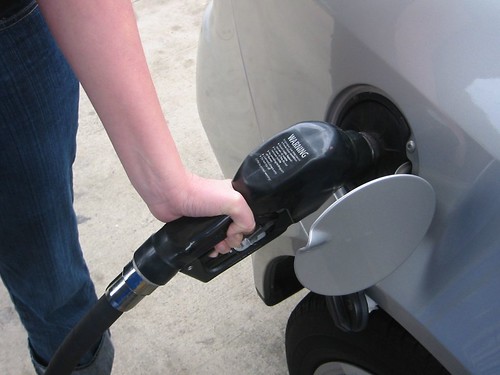
That day, I spent a lot of money on gasoline because we didn't plan ahead. Unplanned activities are costly and can be a financially disastrous habit if it remained unchecked.

The lesson: In everything you do,  it is best to sit down and plan ahead. It will save you a lot of MONEY. Plan ahead when you travel and when going to merket or supermarket.


To our debt-free life,
Jimmy

P.S. There are other habits that can be financially disastrous if unchecked. Can you name some for us? I would appreciate if you can comment.


Photo credits:
http://farm1.static.flickr.com/219/460375914_110a64953a.jpg
http://www.paraisophilippines.com/img/market.jpg

Friday, October 28, 2011

Some Practical Ways To Reduce Debt


This is a bit simple. I found out that we can actually reduce our expenses by using the "zero waste" concept.
I am clearing the vermi compose 
I came to know of this concept when my wife and I, my daughter Nica, our friends Mon and Elvira together with their children went to attend a week of seminar at Semilya Sa Kinabuhi in Bukidnon. This seminar was different. The mornings were dedicated to working in the field, which includes watering the vegetable gardens, cleaning the environment, vermiculture, etc. After lunch, we go to our class. We learned a lot from this one week of stay at Semilya.
Nica, Maritess and me enjoying our work of selecting our harvest of stringbeans to be sold at the market

Maritess and I, preparing early for work at the farm


Before we left for home, we toured Mt. Moriah, a lettuce farm owned by Dodong Cacanando. Dodong is also the President of Semilya. Mt. Moriah is one of the biggest supplier of lettuce to Mc Donalds.
Me and Maritess having a taste of how to harvest the lettuce
Me at Moriah Farm

At Mt. Moriah, they implement the "zero waste" concept. Simply put, they use whatever they can from what they have instead of buying these. Case in point is the catch basin for the waste of their piggery farm. Instead of using "iron" they used bamboo as the material. They are also using the pig's waste as their fertilizer. In this way they save a lot of money!

What do you think this will do to our budget if we put this concept in our homes? I can think of one example: instead of buying vegetables, why not plant them in your backyard? Okra, Camote tops, Kangkong are a some example. We have a pumpkin garden where we source its leaves as our veggy. We also have Malunggay, the leaves of which are a great source of nutrients.. for free.

Simple things like this contribute to reducing our debt as we use whatever we have instead of buying them outright.

What else can you think of? Why not share it with us?

To your debt-free life,
Jimmy

Friday, October 07, 2011

Getting Out Of Debt Takes Courage


I have noticed that time is an important ally in our battle to reduce debt. There is a time for everything. When my wife and I decided to deal with our debts, we realized that we have to do something fast. Let me share with you some of the practical, down-to-earth actions we did:

1. We reduced our expenses. This was simple. First, we terminated our cable TV subscription since we are having a hard time paying for it anyway. That was easy. Second, If I could, I did all maintenance work at home. Lastly, we sat down with our children and told them what we were trying to do and we enlisted their cooperation. That was a bit embarrassing but we did it. It paid off. Every expenses, no matter how small, was evaluated against our goal of reducing expenses.

2. We looked for ways to increase our income. My wife, after some encouragement, have gone into business distributing Dakki products. She just started but we know it will produce one day. We looked for items in the house that we don't need and we put them on sale. These included two (2) chest freezers and other items. In other words, we sold and still selling our non-performing assets. Then I got a raised in my salary early this year. That was timely!

3. We Invested. This was a bit hard. The only way we knew how to do this was to seek the wisdom of our God. You may not believe it, but it works! We practiced what we believe -- that as we sow, we will reap. We first gave to God our tithes, the ten percent of any amount we received.  Then, we sowed money by helping those who were in need. This was sacrificial giving on our part, since we also need money. You can try this one, it works every time. The amount of money we received was more than what we gave and helped us in balancing our finances.

In all of these things, the bottom line is to do all you can to generate cash in order to avoid falling into debt while clearing your existing debts.

It's almost a year now. Time has helped us recover some debts. One of my credit card has been fully paid. Patience paid off.

What else do can I do? Maybe you have ideas we can put into action.

To our debt-free life,
Jimmy

Photo credit: http://www.flickr.com/photos/alancleaver/4105755730/sizes/m/in/photostream/